The first fitting of a made-to-order wedding dress: how to prepare and what happens
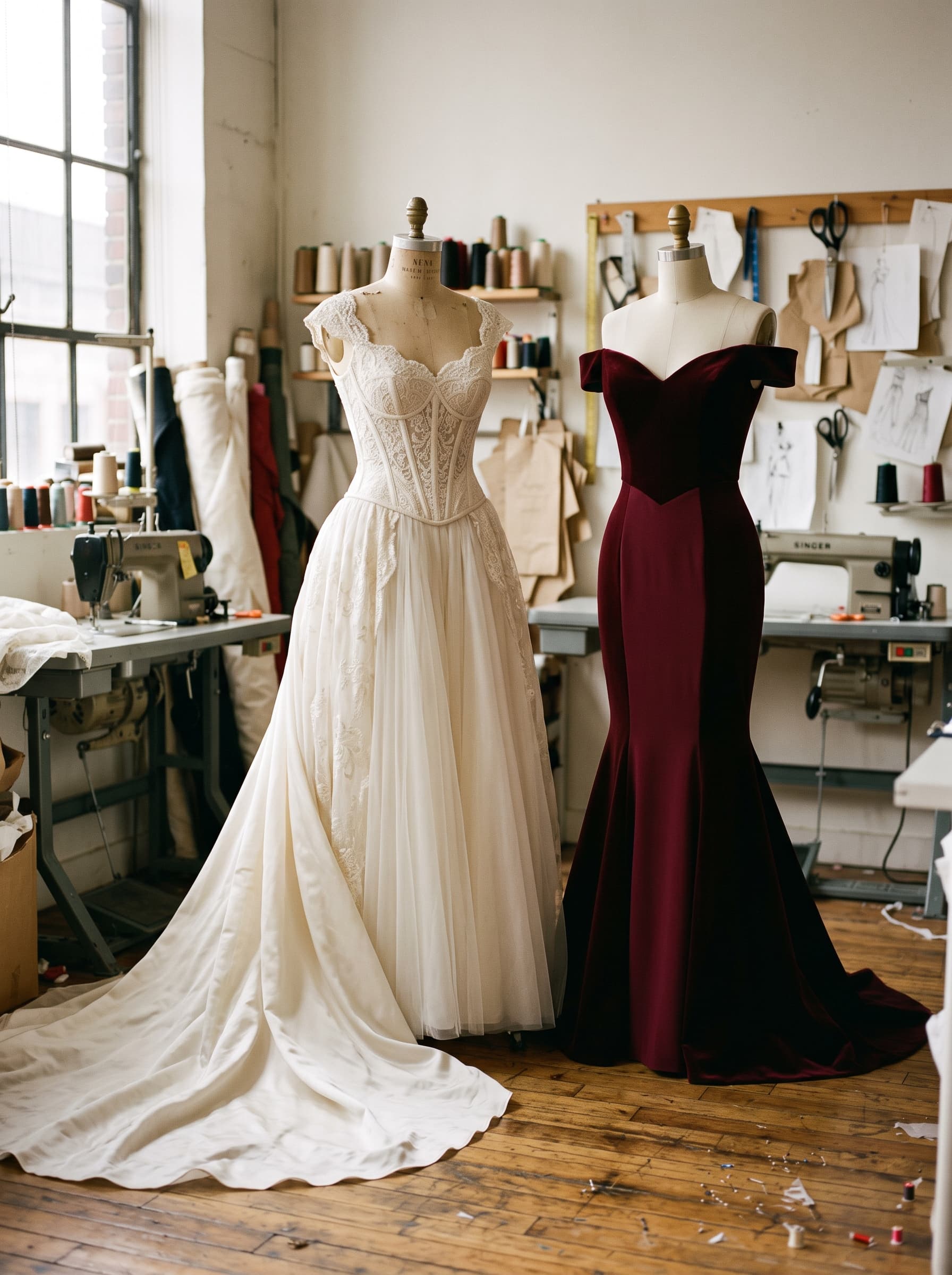
The first fitting is the moment brides both look forward to and slightly dread: the dress is not finished yet, often without lining or seam finishing, tacked together or made up in calico. Here is how to prepare for it and what actually happens.
What you will see at the first fitting
This is not a finished dress but a working structure:
- A toile in inexpensive fabric (muslin or calico) for complex silhouettes - we check the fit and the balance before cutting the real fabric.
- Or the dress in rough assembly in the actual fabric, if the design is simpler - with no final seam finishing, without some of the decoration, tacked rather than finally stitched.
The aim of this stage is not beauty but fit: how the dress sits at the bust, the waist, the hips, the sleeve length and the hem.
What to bring
- The underwear you will wear on the day (or the closest thing to it in shape) - the shape of the bust and the waistline depend on it directly.
- A heel of the height you plan to wear at the wedding - the exact hem length depends on it.
- References and photos, if you have new ideas about the decoration or the neckline - now is a good moment to raise them.
- It helps to have someone whose opinion matters to you at the fitting - but one or two people, not a crowd: too many opinions are what confuse you.
What is normal to see at this stage
- Pins and tacking thread instead of clean seams - this is a working state, not the final one.
- Small creases and excess fabric - these are marked in chalk right on you and taken out at the next stage.
- Some decoration missing - embroidery, beading and appliqué are usually added after the fit is approved, so that finished work does not have to be redone.
- Raw edges and a loosely tacked lining - the seams are finished later.
What to watch for and say straight away
- Anything that pinches, pulls or, on the contrary, stands away in a particular place - tell the maker at once, even if it seems trivial.
- Any difficulty raising your arms, sitting or bending - at the wedding the dress has to live with you all day, not just stand still in front of a mirror.
- Sleeve length, depth of neckline, how it sits on the shoulders - all of this can still be adjusted now, with the least work.
Do not hesitate to mention discomfort: corrections at this stage are part of the process, not a sign that something has gone wrong.
How many fittings are usually needed
The usual plan is two or three fittings: the first for fit and balance, the second to refine after the corrections and with the decoration added, and the final one as a check, often with the whole look together (heels, jewellery). More on timings and stages is in "How long a made-to-order wedding dress takes".
In brief: common questions
Can I come to a fitting without the right underwear and just eyeball it? Better not to risk it - even a difference of a centimetre or two at the bustline changes how the corset sits.
What if the dress at the fitting is nothing like what I imagined? Talk the difference from the sketch through with the maker right away - at this stage the construction can still be adjusted; later, changes are harder and slower.
Is it normal for the first fitting to happen without the skirt or the sleeves? Yes, if those are pieces that need to be cut separately - they may be fitted on their own at the next stage.
Want a dress no one else has?
Also on this: the wedding dress collection · the gallery of our work · bespoke wedding dresses in St Petersburg