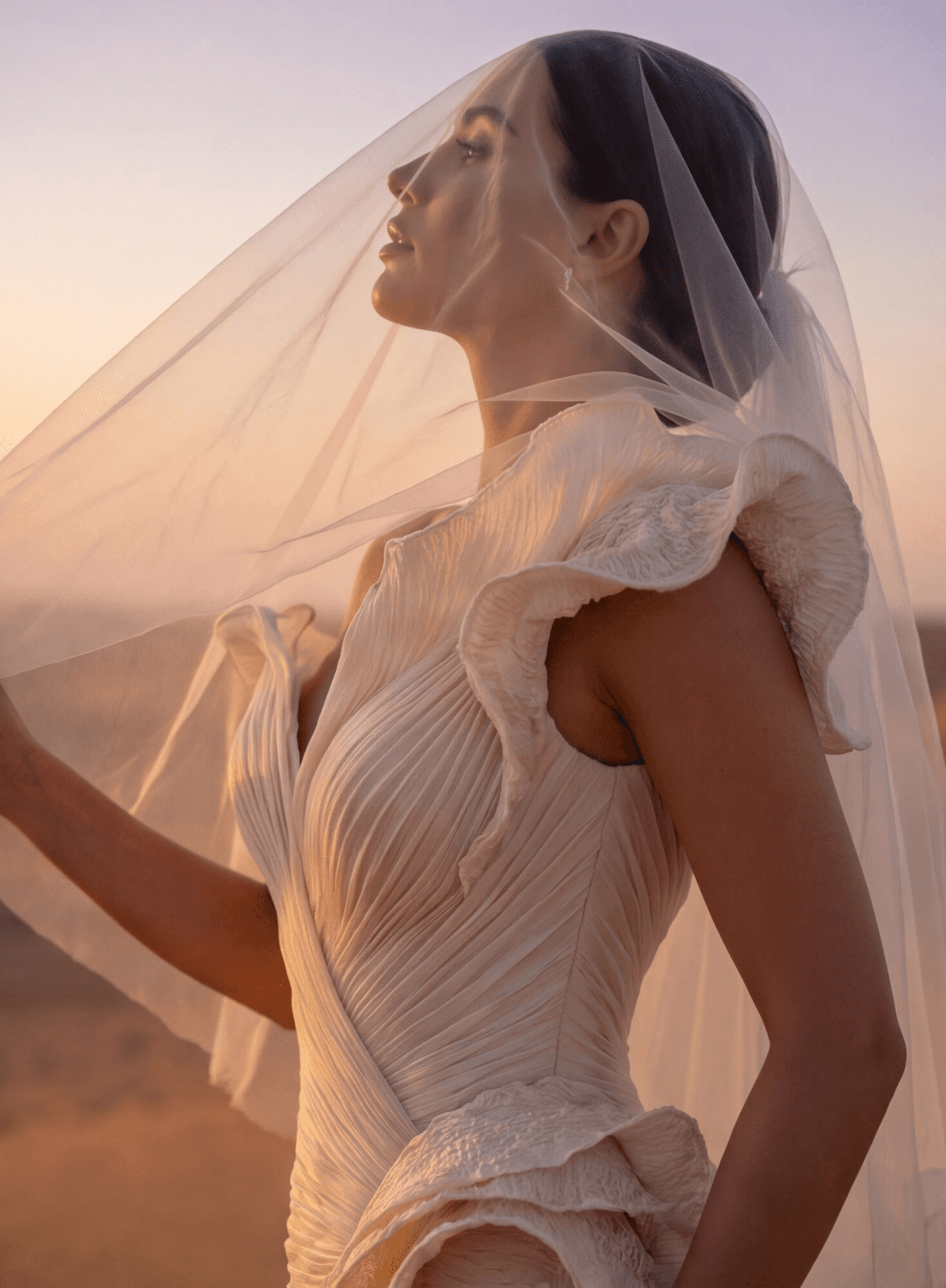
Caring for a wedding dress: from the last fitting to the day and after
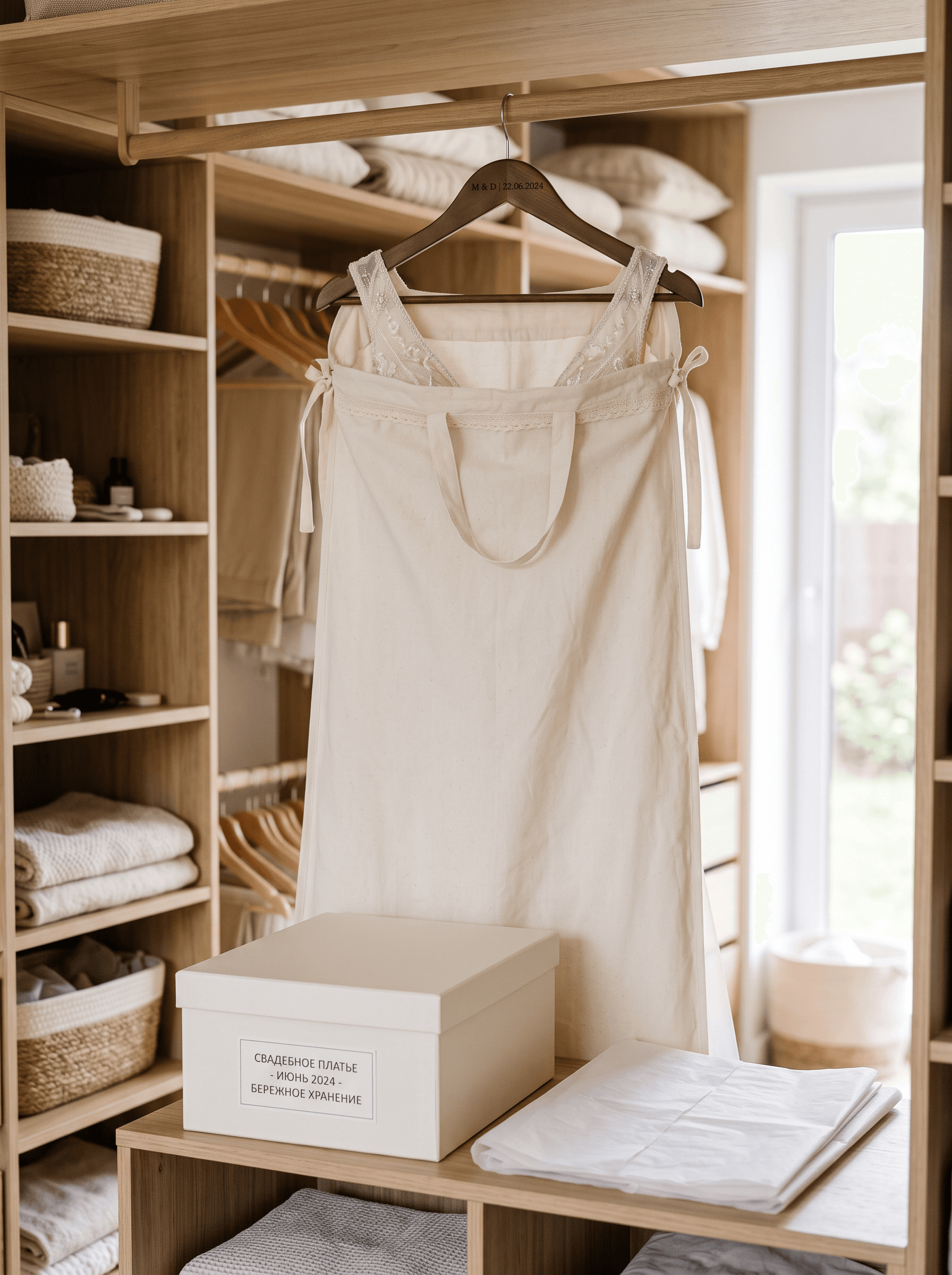
The dress is made, the fittings are done - and then comes a question people rarely think about in advance: how to get it to the wedding day in perfect condition, what to do if something happens during the celebration, and how to preserve it afterwards. Here is practical advice from the atelier's experience.
Storing it at home before the wedding
- A hanger with broad shoulders - a narrow wire hanger will deform the shoulder seam and the bodice within a few weeks.
- A breathable garment bag - dense polythene makes the fabric sweat and can leave a yellow cast on pale satin and silk. Cotton or non-woven is the right choice.
- Hang it upright, away from radiators and windows - temperature swings and direct light spoil the colour and the structure of the fabric.
- A skirt with a voluminous hem (tulle, organza) is best hung so the hem does not touch the floor or other things in the wardrobe - creases in tulle steam out, but it is better not to make them.
If the dress is finished several months before the date, take it out of the bag every three or four weeks, shake it out and air it.
One or two days before the wedding
- Steaming is best left to someone who has worked with this particular fabric - an inexperienced hand can flatten lace with an iron or leave shiny marks on velvet. Many ateliers, ourselves included, offer a final steam before handover.
- Stand the dress upright on the day it is delivered; do not lay it flat in the boot of a car.
- Check that every hook, the zip and the corset lacing are in place - better done in advance than on the morning itself.
A first-aid kit for the wedding
A small bag that saves your nerves:
- clear thread and a needle - for a bead or button that comes loose;
- safety pins - to hold a hem or a strap temporarily;
- a small stain remover or simply alcohol-free wipes - for a drop of champagne on pale fabric; blot, do not rub;
- spare hooks or eyes, if the corset fastens with them;
- clear nail varnish - it will stop a run in the underskirt if one appears.
Do not rub the fabric when something spills - blot with a wipe from the edge of the mark towards the centre so as not to spread it.
After the wedding: cleaning and keeping
- Dry cleaning within one or two weeks of the day. Even traces of champagne, cream or perspiration invisible to the eye turn yellow over time and come through the fabric, and get harder to remove.
- Choose a cleaner experienced specifically with wedding dresses - they know how to handle embroidery, beading and delicate fabrics like silk.
- For long-term storage, use acid-free tissue paper inside the folds of the skirt and an acid-free cardboard box - it keeps the fabric white far longer than a bag in a wardrobe.
- Once every year or two, take the dress out and refold it in fresh paper - otherwise creases from lying in one position become permanent.
If we made your dress
FREYA atelier will tell you how to care for your particular fabric and decoration - silk, velvet and heavy satin have different rules for cleaning and storage. We go through this at the final fitting, and you can always write to us directly with questions after the wedding.
Not yet at the final fitting? Have a look at the piece on how long a wedding dress takes to make and what happens at each stage.
In brief: common questions
Can I iron the dress myself? Only through a cloth and on a low setting for delicate fabrics; lace, embroidery and beading are best not touched with an iron at all - use a steamer at a distance.
What if a stain lands right at the dinner? Blot with an alcohol-free wipe, do not rub, and if possible put nothing else on it - leave the removal to a dry cleaner straight after the wedding.
Should the dress be stored in a vacuum bag? No - a vacuum crushes the volume of tulle and organza and can press in folds that never come out.
Want a dress no one else has?
Also on this: the wedding dress collection · the gallery of our work · bespoke wedding dresses in St Petersburg